


3 Million Residential Contracts Authenticated Until May 2022
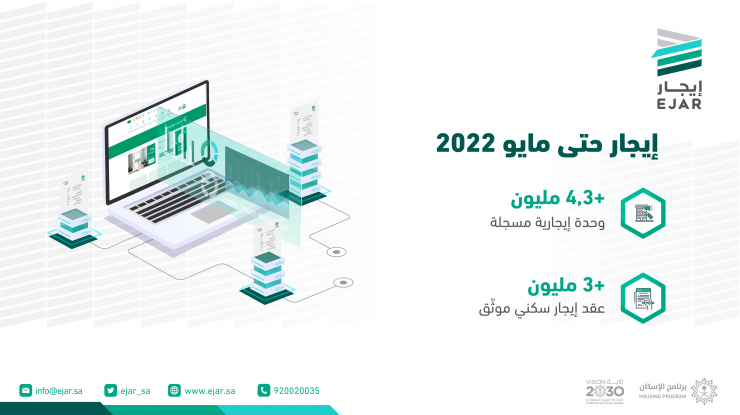
Residential rental contracts authenticated in the Electronic Rental Services Network exceeded 3 million residential rental contracts since the launch of the program until May 2022. This means that 45% of the market size of occupied residential rental units in the Kingdom is documented with rental contracts. This reflects the distinguished services provided by the Ejar Network to all parties involved in the rental process. The number of real estate units whose data has been registered in the network also exceeded 4.3 million rental units.
The Ejar Program confirmed in its press statement today, on the sidelines of the Maskan Real Estate Exhibition held in Riyadh from 26–29 May, that the ongoing development of the network, the improvement of services, and the continuous addition of new features have significantly increased confidence among beneficiaries in the real estate rental sector. This has contributed to achieving record-breaking figures in recent periods, whether in the number of authenticated contracts, registered units, or financial transactions carried out through the network.
The program further indicated that efforts to enhance the real estate rental sector, raise its efficiency, simplify its rental processes and procedures, and create a secure environment for financial and contractual dealings are continuous and ongoing. These efforts contribute to improving the investment climate, reducing risks, safeguarding the rights of all rental parties, and shortening litigation periods on rental contracts, which has resulted in a 50% decrease in rental disputes in the general courts.
Ejar had previously announced the addition of several services that have gained significant traction in the real estate sector. These include the rental index, handover and delivery services, rental behavior assessments, electronic contract authentication directly through the network, and the provision of diverse payment channels for rental installments, such as Mada and SADAD, as well as balance top-up options. The system also allows beneficiaries to make partial payments and has established strategic partnerships with other entities, enabling services to be transferred under the actual user’s name for the rental unit.